From Local to Leading: A Guide to Growing Your Business
Discover how to take your business from local to leading with practical growth strategies. Learn how to improve Local SEO, build customer trust, generate and manage leads, use AI and automation, increase customer rete...
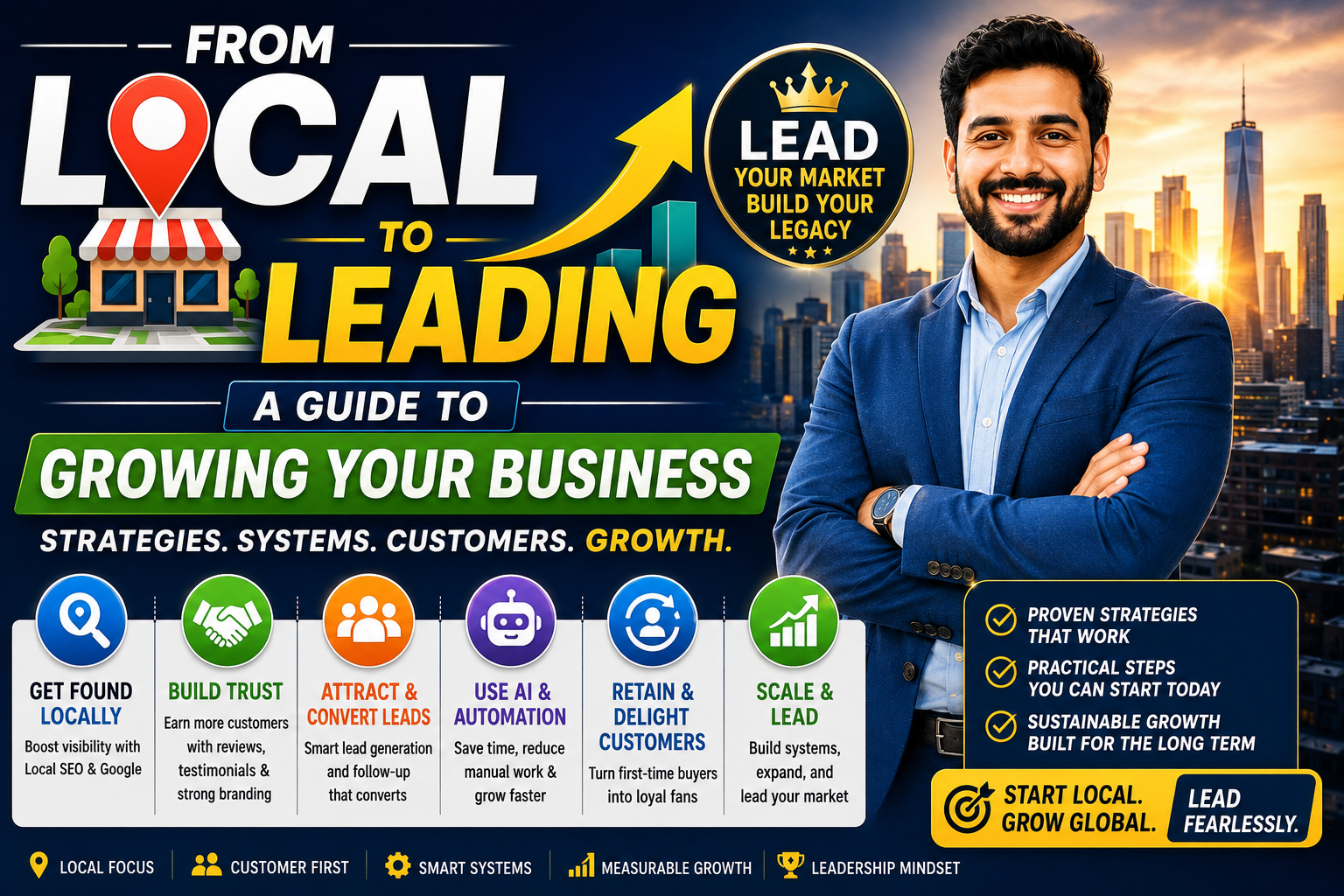
From Local to Leading: A Guide to Growing Your Business
Every successful business starts somewhere. For many entrepreneurs, that beginning is a small shop, office, clinic, service center, restaurant, agency, or home-based business serving a local community.
But being local does not mean staying small.
With the right combination of customer experience, digital visibility, technology, marketing, sales systems, and strong relationships, a local business can grow from being one of many choices to becoming a recognized leader in its market.
The journey from local to leading is not about growing as quickly as possible. It is about building a business that customers can discover, trust, choose, recommend, and return to.
This guide explains how to create that growth systematically.
1. Define What Business Growth Means to You
Before developing a growth strategy, decide what growth actually means for your business.
It could mean:
More customers
Higher monthly revenue
Better profit margins
More repeat customers
Additional locations
New products or services
A larger team
Stronger brand recognition
Expansion into new cities
Online sales
Franchising
Becoming a market leader
Set measurable goals instead of simply saying, “I want to grow my business.”
For example:
Increase qualified enquiries by 30% within six months.
Increase repeat customers by 20%.
Open a second location within 18 months.
Clear goals make it easier to decide where to invest your time and money.
2. Understand Your Ideal Customer
Businesses grow faster when they understand exactly whom they serve.
Identify your ideal customer's:
Location
Needs
Problems
Budget
Buying behavior
Preferred communication channels
Expectations
Common questions
Reasons for choosing your business
Reasons for choosing competitors
Then ask an important question:
Why should this customer choose us?
Your answer becomes the foundation of your positioning.
Perhaps you offer better service, specialized expertise, convenience, faster delivery, transparent pricing, superior quality, personalized attention, or stronger after-sales support.
Make that difference clear throughout your marketing.
3. Build a Brand People Remember
A strong local brand is more than a logo.
Your brand includes how customers perceive your business at every interaction.
Develop consistency across:
Business name
Logo
Brand colors
Website
Social media
Marketing materials
Store or office
Employee communication
Customer support
Packaging
Quotations and invoices
Most importantly, create a consistent customer experience.
A memorable brand gives people a reason to recognize, remember, and recommend your business.
4. Strengthen Your Google Presence
When customers need a local product or service, online search is often one of their first steps.
Maintain an accurate and complete Google Business Profile with:
Business name
Address
Phone number
Website
Opening hours
Categories
Products
Services
Photos
Videos
Keep the information updated and respond professionally to reviews.
Your goal is simple:
When someone searches for the type of service you provide in your area, your business should be easy to discover and evaluate.
5. Invest in Local SEO
Local SEO helps your website and business become more visible for location-based searches.
Potential customers may search for terms such as:
“Restaurant near me”
“Best salon in Bangalore”
“Website development company in Bangalore”
“Real estate agency near me”
“Car repair service near me”
Create useful pages around the services and geographic areas you genuinely serve.
Optimize:
Page titles
Headings
Meta descriptions
Service pages
Location pages
Internal links
Images
Contact information
Create useful content answering questions your customers commonly ask.
The objective is not simply to attract website visitors. It is to attract people who could realistically become customers.
6. Turn Your Website into a Sales Tool
Your website should do more than describe your company.
It should help visitors take the next step.
Within seconds, a visitor should understand:
What do you offer?
Who is it for?
Where do you operate?
Why should they trust you?
What should they do next?
Include clear calls to action such as:
Call Now
WhatsApp Us
Get a Quote
Book an Appointment
Request a Consultation
Visit Our Store
Add testimonials, reviews, case studies, previous work, FAQs, and clear service information to reduce uncertainty.
Your website should also be fast and mobile-friendly.
7. Build Trust Through Customer Reviews
Reputation is one of the strongest competitive advantages a local business can develop.
Encourage satisfied customers to leave genuine reviews.
You can request reviews through:
WhatsApp
SMS
Email
QR codes
Receipts
Follow-up messages
Respond professionally to both positive and negative feedback.
Do not view reviews only as ratings.
They provide valuable information about what customers appreciate and where your business needs improvement.
8. Create Content That Establishes Authority
Market leaders educate their customers.
Create content that answers questions, solves problems, and demonstrates expertise.
Content can include:
Blog posts
Short videos
FAQs
Tutorials
Customer success stories
Case studies
Industry insights
Buying guides
Product demonstrations
Before-and-after examples
Instead of constantly saying “Buy from us,” show customers why your business understands their needs.
Over time, useful content can strengthen trust and authority.
9. Use Social Media to Build Community
Social media should not function only as an advertising channel.
Use it to create relationships with your customers and local community.
Share:
Customer stories
Educational tips
Behind-the-scenes content
Team introductions
New products
Offers
Community activities
Events
Testimonials
Short videos
Business milestones
Respond to comments and messages.
A local business that feels connected to its community can create an advantage that larger competitors may find difficult to replicate.
10. Use WhatsApp for Faster Customer Communication
Customers value convenience.
WhatsApp can provide a simple channel for:
Enquiries
Quotations
Product information
Appointment confirmations
Order updates
Follow-ups
Customer support
Feedback
Review requests
As your business grows, integrate customer conversations with your CRM or other management systems.
This helps prevent valuable enquiries from becoming lost in individual employees' messages.
Follow applicable consent and messaging requirements when communicating with customers.
11. Build a Professional Sales Process
A growing business cannot depend entirely on memory or informal follow-up.
Create a defined sales pipeline.
For example:
New Lead → Contacted → Qualified → Proposal → Follow-Up → Negotiation → Won/Lost
For every enquiry, record:
Customer name
Contact information
Requirement
Lead source
Estimated value
Assigned employee
Current status
Follow-up date
Next action
A CRM can help your team manage this process consistently.
As your business grows, systems become increasingly important.
12. Use AI and Automation to Scale
Small businesses often have limited employees and resources.
AI can help teams accomplish more without automating away valuable customer relationships.
AI can assist with:
Customer support
Lead qualification
Content ideas
Marketing copy
Follow-up drafts
Review responses
Email campaigns
FAQs
Appointment assistance
Business analytics
Automation can connect your:
Website → Leads → CRM → WhatsApp → Follow-Up → Sales → Customer Support
A useful principle is:
Automate repetitive work. Keep important relationships human.
13. Turn Customers into Repeat Customers
Growth becomes more sustainable when customers return.
After a successful transaction, continue building the relationship.
Retention strategies can include:
Loyalty programs
Service reminders
Renewal reminders
Membership programs
Customer-only offers
Birthday benefits
Useful content
Personalized follow-ups
Customer appreciation programs
Instead of asking only:
“How do we get more customers?”
also ask:
“How do we keep the customers we already have?”
14. Build a Referral Engine
Satisfied customers can become powerful advocates.
Create a structured referral process.
A simple model is:
Happy Customer → Referral Request → New Prospect → New Customer → Reward
Referral rewards might include discounts, credits, loyalty points, complimentary services, or other relevant benefits.
Keep your referral program easy to understand.
Most importantly, provide an experience customers genuinely want to recommend.
15. Build Strategic Local Partnerships
Other local businesses can become valuable growth partners.
Look for businesses serving similar customers without directly competing with you.
Examples include:
Real Estate Agent + Home Loan Consultant
Gym + Nutritionist
Hotel + Tour Operator
Wedding Planner + Photographer
Website Developer + Digital Marketing Agency
Partnership opportunities may include:
Referrals
Joint promotions
Events
Bundled services
Content collaborations
Community initiatives
Strong local networks can create growth opportunities that advertising alone cannot provide.
16. Measure What Is Working
Growth should be measured.
Track important KPIs such as:
Leads generated
Qualified leads
Calls
WhatsApp enquiries
Appointments
Conversion rate
Cost per lead
Customer acquisition cost
Average order value
Repeat customers
Customer retention
Reviews
Referrals
Monthly revenue
Profitability
Marketing ROI
Create a monthly dashboard and compare results over time.
The objective is not to collect endless data.
It is to answer questions such as:
Which channels generate our best customers?
Where are we losing leads?
Which services generate the highest profit?
How many customers return?
Which marketing investments produce revenue?
17. Standardize Before You Expand
Growth can create problems when a business expands before its processes are ready.
Before opening another location, hiring aggressively, franchising, or entering another city, document your important processes.
Create standard operating procedures for:
Sales
Customer support
Service delivery
Quality control
Billing
Marketing
Lead management
Complaints
Employee responsibilities
Reporting
A business becomes easier to scale when success does not depend entirely on the owner being involved in every decision.
The Journey from Local to Leading
A practical growth journey can be visualized as:
Local Visibility
↓
Customer Trust
↓
Lead Generation
↓
Consistent Follow-Up
↓
Sales Conversion
↓
Excellent Customer Experience
↓
Customer Retention
↓
Reviews & Referrals
↓
Brand Authority
↓
Systems & Automation
↓
Expansion
↓
Market Leadership
Each stage strengthens the next.
Skipping the fundamentals can make expansion expensive and difficult.
The Local-to-Leading Growth Formula
A simple formula is:
Visibility + Trust + Customer Experience + Systems + Retention + Innovation = Sustainable Growth
Visibility
Make it easy for customers to discover your business.
Trust
Give customers evidence that you can deliver what you promise.
Customer Experience
Create experiences people want to repeat and recommend.
Systems
Build repeatable processes for marketing, sales, operations, and customer service.
Retention
Turn first-time buyers into long-term customers.
Innovation
Use technology, AI, automation, and new ideas to continually improve.
Final Thoughts
Becoming a leading business does not happen because of one advertisement, viral social media post, or marketing trick.
Leadership is built gradually.
Start by understanding your customers and strengthening your local visibility. Build a professional brand and website. Develop a strong reputation through excellent service and genuine reviews.
Create reliable systems for lead management, sales, follow-up, retention, and referrals.
Then use CRM, AI, and automation to make those systems more efficient.
As the business becomes predictable and repeatable, explore new products, locations, partnerships, markets, and expansion opportunities.
The journey is:
Get Found → Get Trusted → Get Chosen → Deliver Value → Get Recommended → Build Systems → Scale → Lead
You do not need to become the biggest business in your market.
You need to become one of the businesses customers remember, trust, choose, and recommend.
That is how a local business becomes a leading business.