How to Grow Your Local Business in 2026
Discover how to grow your local business in 2026 with proven strategies for Local SEO, Google Business Profile, digital marketing, customer reviews, WhatsApp, social media, AI automation, lead generation, and customer...
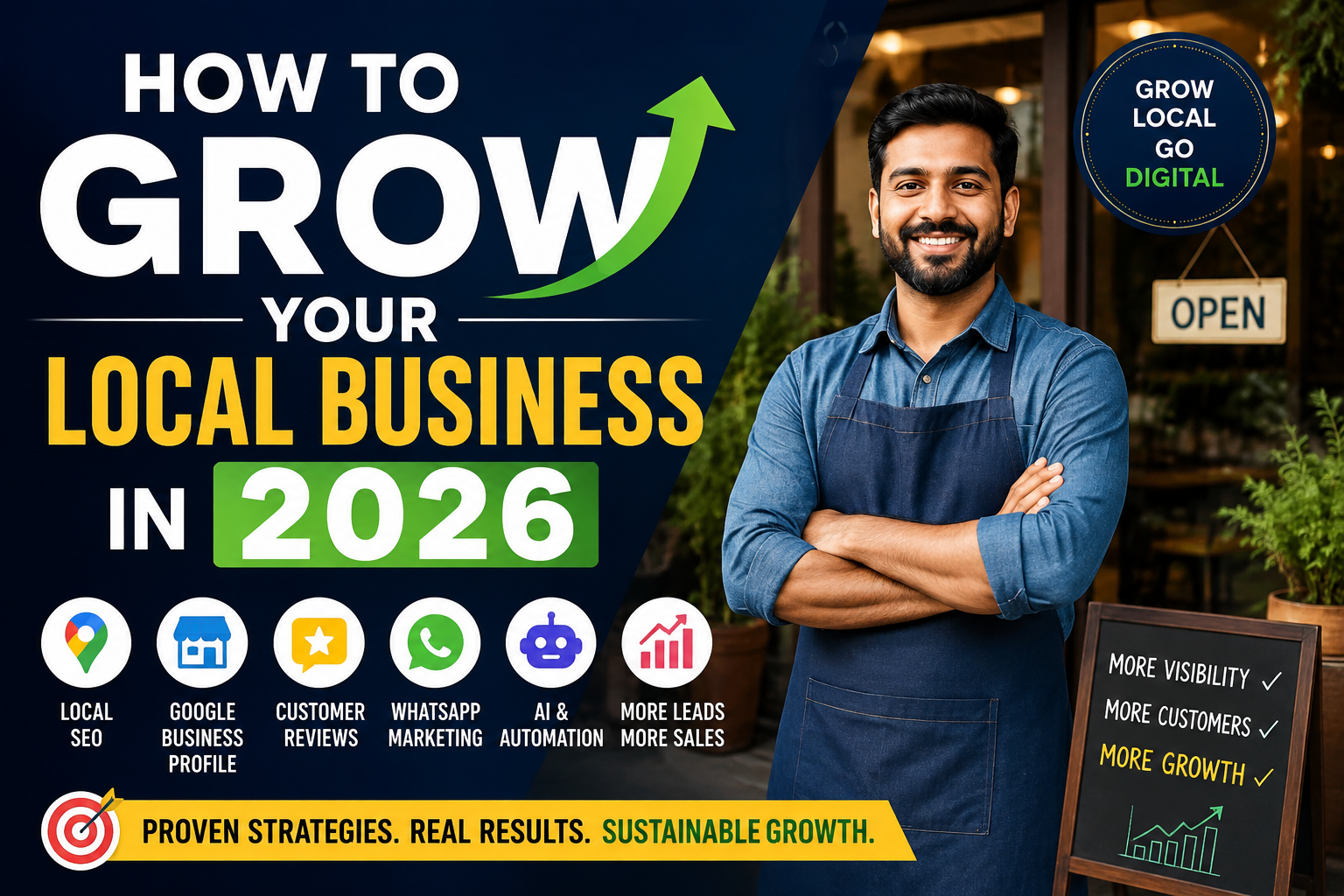
Growing a local business in 2026 requires more than offering great products or services. Customers increasingly discover businesses through Google, social media, online reviews, maps, websites, WhatsApp, and AI-powered search.
Whether you run a restaurant, salon, clinic, retail store, real estate agency, gym, hotel, repair service, consultancy, or another local business, building a strong digital presence can help you attract more customers and generate consistent growth.
Here are 10 practical strategies to grow your local business in 2026.
1. Optimize Your Google Business Profile
Your Google Business Profile is one of the most important tools for attracting nearby customers.
Keep your business information complete and accurate, including:
- Business name
- Address
- Phone number
- Website
- Business hours
- Products and services
- Business categories
- Photos and videos
- Customer reviews
Regularly upload photos, publish updates, answer customer questions, and respond to reviews.
An optimized profile can improve your visibility when customers search for businesses in their local area.
2. Focus on Local SEO
Local SEO helps your business appear when people search for services such as:
“Best salon near me”
“Digital marketing company near me”
“Restaurant in Bangalore”
“Real estate agent near me”
“AC repair near me”
Create dedicated website pages for your important services and locations.
Use relevant local keywords naturally in your page titles, descriptions, headings, website content, image descriptions, and contact information.
Also make sure your business name, address, and phone number are consistent across major online directories.
3. Build a Professional, Mobile-Friendly Website
Your website acts as your digital storefront.
In 2026, customers expect websites to be fast, mobile-friendly, easy to navigate, and trustworthy.
Your website should clearly communicate:
- What your business offers
- Where you operate
- Why customers should choose you
- How much your services cost, where appropriate
- Customer testimonials
- Frequently asked questions
- Contact information
- WhatsApp or calling options
- Booking or enquiry forms
Every important page should have a clear call to action such as Call Now, Get a Quote, Book Appointment, WhatsApp Us, or Visit Our Store.
4. Generate More Customer Reviews
Reviews influence both customer trust and local visibility.
After completing a successful sale or service, make it easy for customers to leave feedback.
You can request reviews through:
- SMS
- QR codes
- Receipts
- Thank-you pages
- Follow-up messages
Avoid buying fake reviews. Genuine customer feedback creates stronger long-term credibility.
Respond professionally to positive and negative reviews. A thoughtful response shows potential customers that your business values customer experience.
5. Use WhatsApp for Customer Communication
WhatsApp can be an effective communication and sales channel for local businesses.
Businesses can use it for:
- Customer enquiries
- Appointment confirmations
- Quotations
- Product information
- Order updates
- Follow-ups
- Customer support
- Offers and promotions
- Feedback requests
For larger customer volumes, automation can help organize conversations and reduce repetitive work.
Always obtain appropriate customer consent before sending promotional messages.
6. Create Valuable Social Media Content
You do not need to post everywhere every day.
Choose the social platforms where your customers are most active and publish useful, authentic content consistently.
Content ideas include:
- Product demonstrations
- Before-and-after results
- Customer testimonials
- Educational tips
- Behind-the-scenes videos
- New arrivals
- Limited-time offers
- FAQs
- Team introductions
- Local events
- Short videos and reels
Your content should educate, build trust, and encourage customers to take action rather than focusing only on selling.
7. Use AI to Save Time and Improve Marketing
Artificial intelligence is becoming increasingly useful for small and local businesses.
AI can assist with:
- Writing social media content
- Creating marketing ideas
- Drafting customer replies
- Lead qualification
- Customer support
- Follow-up reminders
- Review responses
- Email campaigns
- Website content
- Marketing analysis
- Appointment management
The goal is not to replace personal customer relationships. Instead, AI can automate repetitive tasks so business owners and employees can spend more time serving customers and closing sales.
8. Create Local Offers and Promotions
Customers respond well to relevant offers.
Consider promotions such as:
- First-time customer discounts
- Referral rewards
- Festival offers
- Birthday offers
- Loyalty programs
- Service bundles
- Limited-time discounts
- Repeat-customer benefits
Use landing pages, QR codes, WhatsApp, email, social media, and in-store displays to promote these campaigns.
Track every campaign so you know which offers actually generate revenue.
9. Build a Customer Database and Follow-Up System
Many businesses spend heavily acquiring new leads but fail to follow up consistently.
Maintain an organized customer and lead database containing information such as:
- Customer name
- Phone number
- Enquiry
- Service required
- Lead source
- Follow-up date
- Lead status
- Purchase history
- Customer preferences
A simple CRM can help your team manage enquiries and prevent valuable leads from being forgotten.
For example, instead of contacting a prospect once, create a structured follow-up process across calls, WhatsApp, email, or SMS where appropriate.
10. Measure What Generates Revenue
Do not judge marketing success only by followers, likes, impressions, or website visitors.
Track business outcomes.
Important metrics can include:
- Leads generated
- Qualified leads
- Phone calls
- WhatsApp enquiries
- Appointments
- Store visits
- Conversion rate
- Cost per lead
- Customer acquisition cost
- Average order value
- Repeat customers
- Customer reviews
- Monthly revenue
- Marketing return on investment
Review these numbers regularly and invest more in the channels producing profitable customers.
A Simple Local Business Growth Formula for 2026
A practical growth system can be summarized as:
Visibility → Trust → Leads → Follow-Up → Conversion → Reviews → Repeat Business → Referrals
First, make your business easy to discover.
Then build trust through your website, reviews, social presence, and useful content.
Convert that attention into enquiries, follow up consistently, deliver a strong customer experience, collect reviews, and encourage repeat business and referrals.
Over time, this creates a sustainable local growth engine.
Final Thoughts
Local business growth in 2026 is about combining excellent customer service with smart digital marketing and automation.
Start with the fundamentals: optimize your Google presence, improve your website, strengthen local SEO, collect genuine customer reviews, communicate effectively through WhatsApp, create useful content, and track your leads.
Then introduce AI and automation where they can save time and improve consistency.
You do not need to implement everything at once. Start with the areas that can make the biggest difference to your business, measure the results, and improve continuously.
With the right combination of local visibility, customer trust, technology, and consistent follow-up, even a small local business can build a powerful presence and compete effectively in 2026.